Burj Khalifa residences (the Armani Residences at floors 19 to 37, the Burj Khalifa Sky Collection at higher floors) operate as a distinct residential category from standard Dubai apartment design, with specific structural, MEP, and view-corridor constraints that shape every interior project. While villa renovation in dubai typically deals with single-family villa envelopes, Burj Khalifa work confronts a high-rise envelope with strict service-core access windows, irreplaceable view corridors, and residence association approval gates. This article documents the real constraints and the specifications that work within them.
The building, briefly
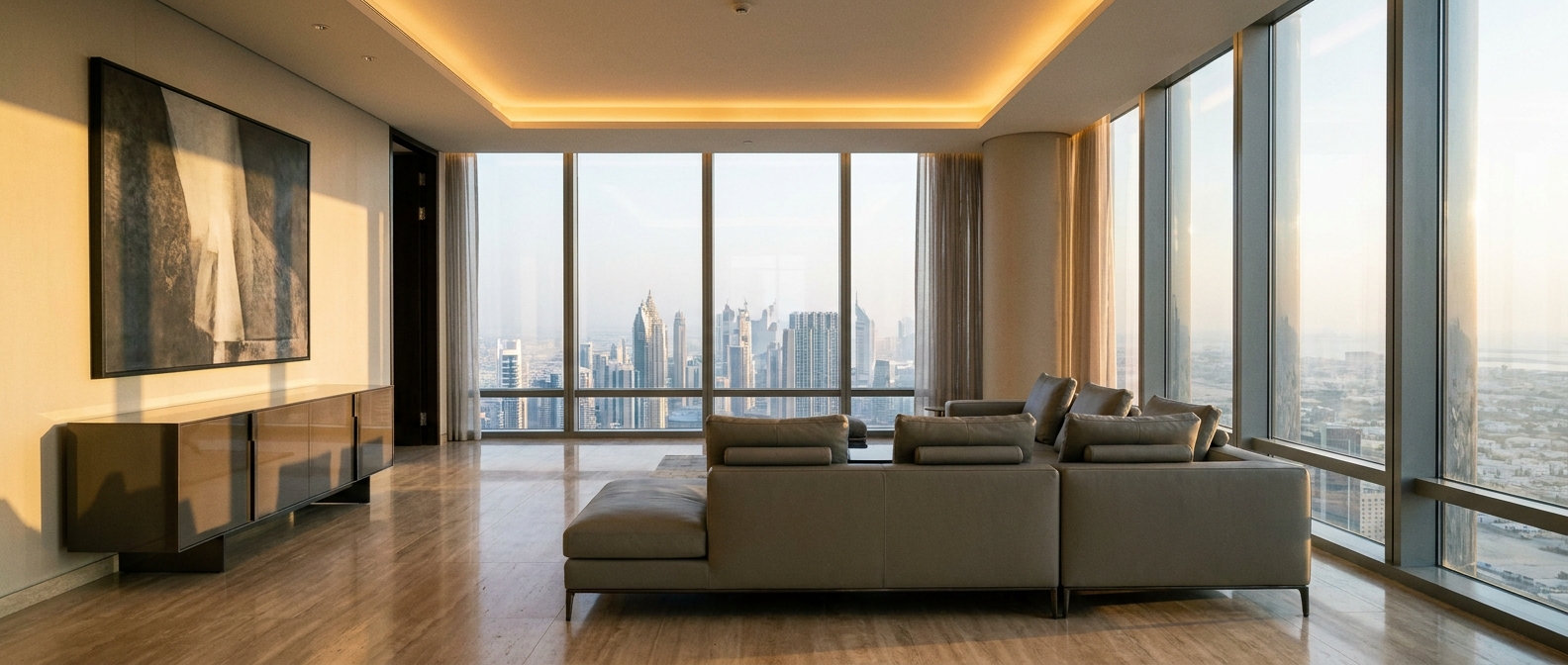
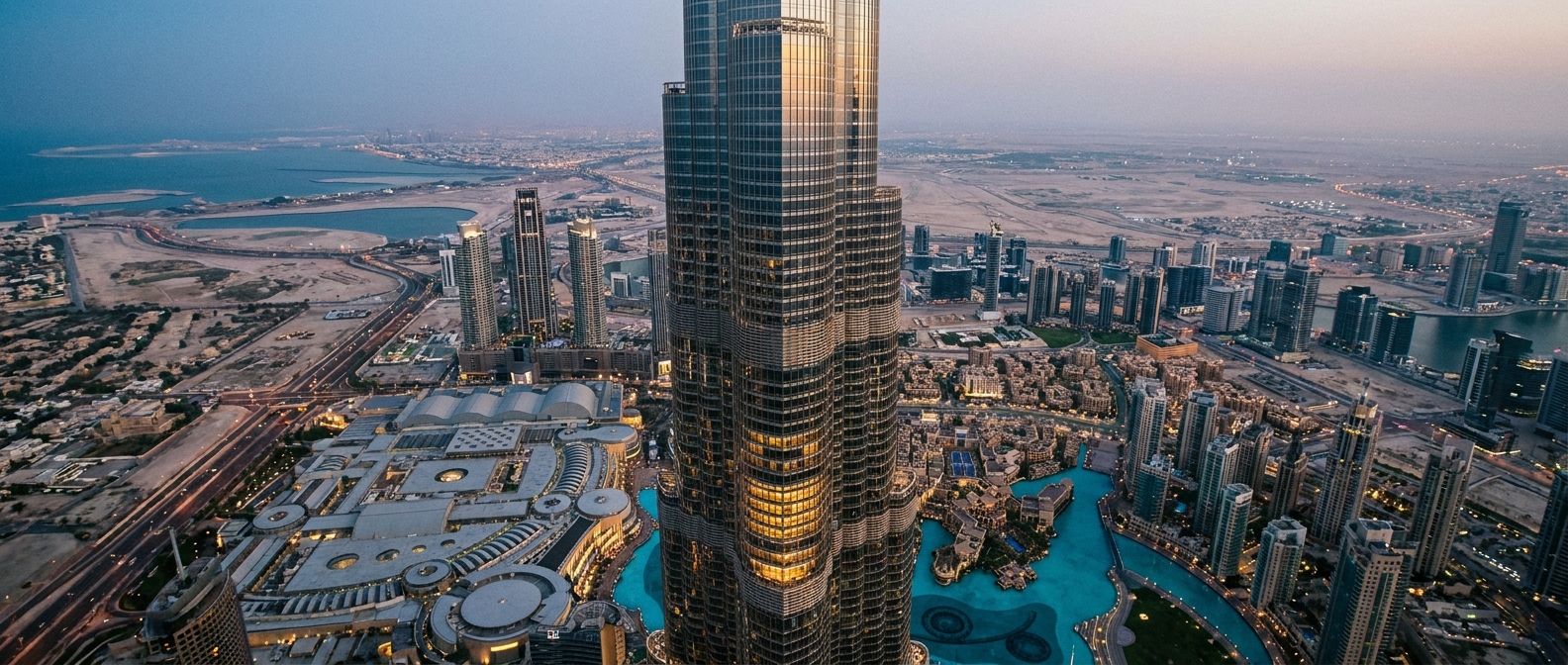
Burj Khalifa, designed by Skidmore Owings & Merrill (architect Adrian Smith) and completed in 2010, stands 828 meters tall with 163 occupied floors. The Armani Residences (floors 19 to 37, designed by Giorgio Armani in collaboration with SOM) and the Burj Khalifa Sky Collection (above the Armani section, with units run as private apartments) form the residential floors. Floor plates are roughly Y-shaped (the building's tri-axial floor plan) with floor-to-ceiling glass on three sides.
Layout constraints specific to the building
Three structural realities shape any Burj Khalifa interior project:
Service core access: The service core (containing elevators, MEP risers, fire stairs) sits at the geometric center of each floor. All MEP risers, plumbing branches, and fresh-air supply trunk through this core. Internal partition walls cannot block service-core access for maintenance.
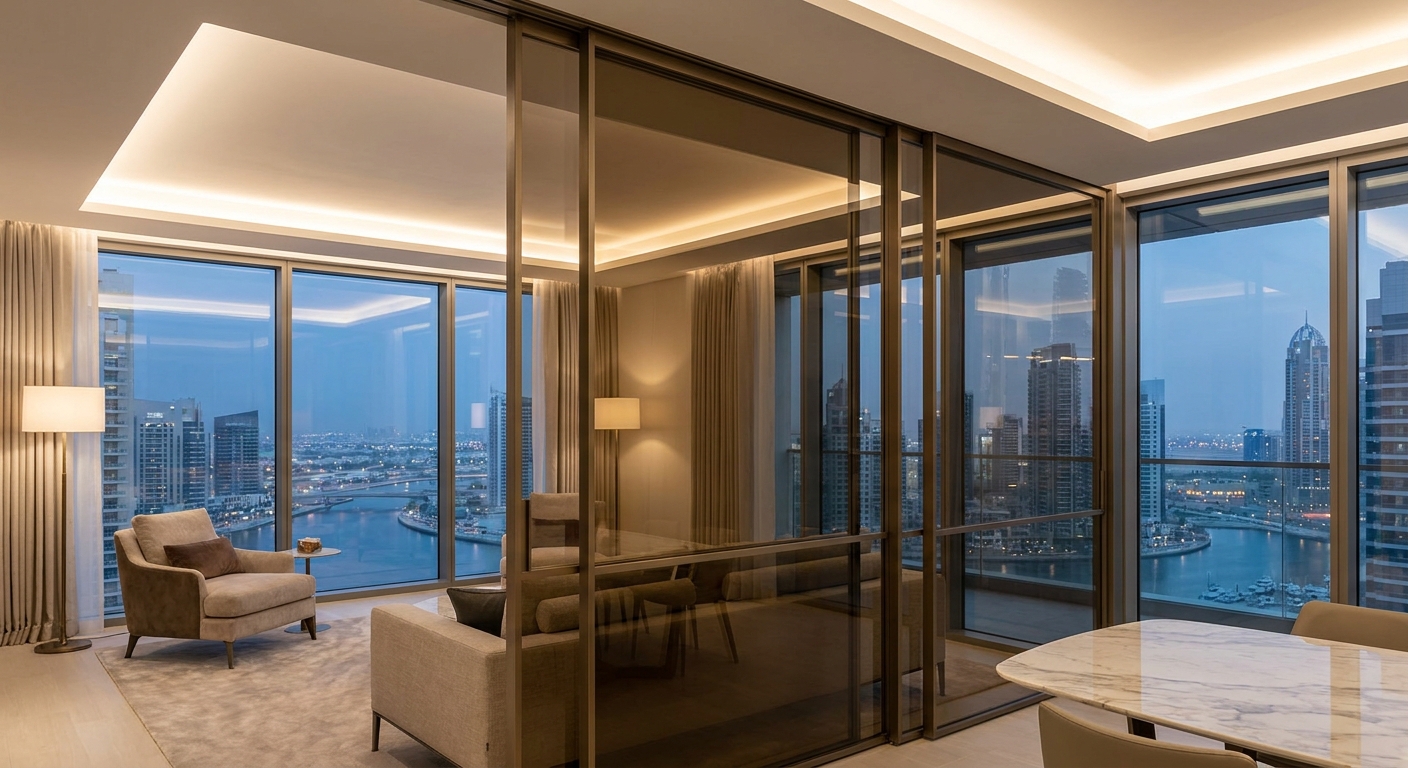
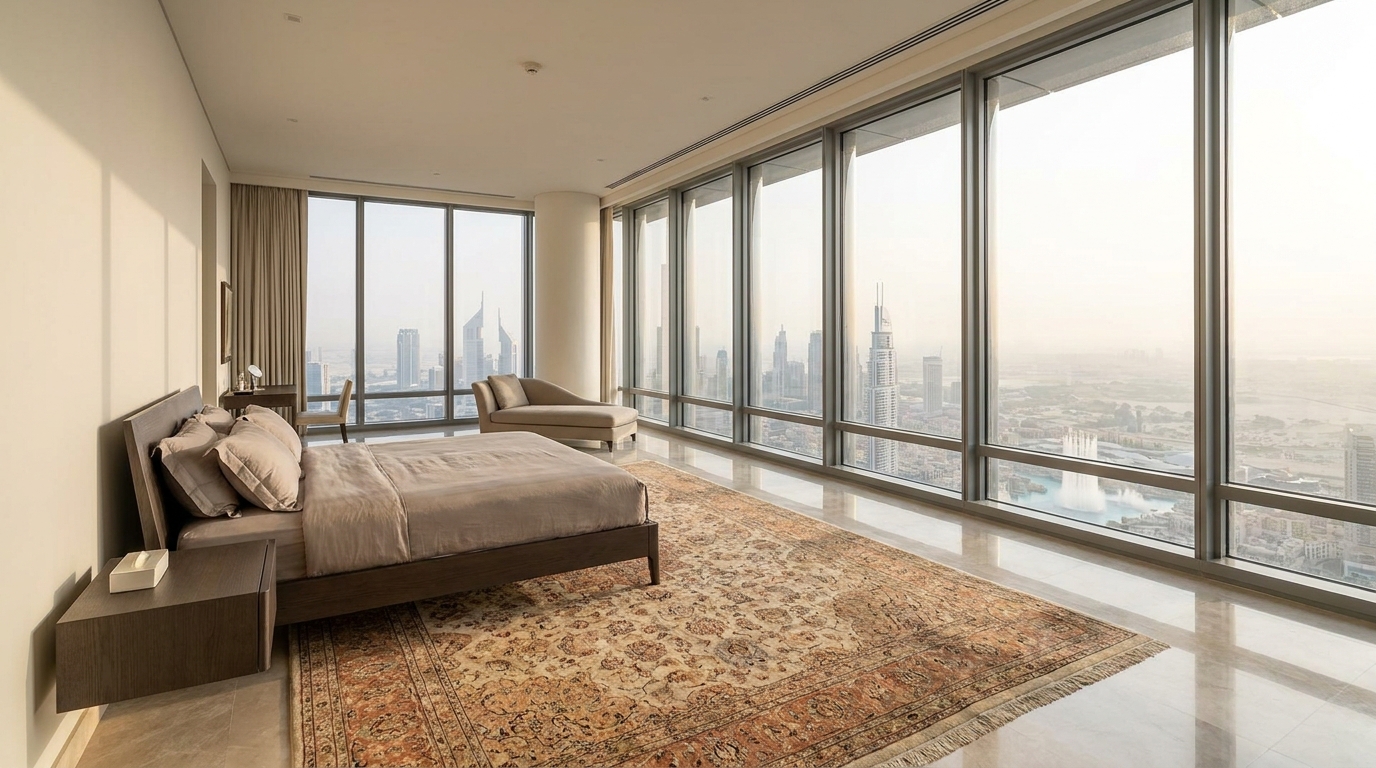
View-corridor preservation: Floor-to-ceiling exterior glass on three sides defines the residence's primary value. Interior partitions must not block the view-corridor sweeps from the entry foyer through living areas to the perimeter glass. Glass interior partitions (Rimadesio Velaria, FormaCristal) preserve view continuity where partitions are required.
Acoustic sub-floor: Burj Khalifa floor slabs use post-tensioned concrete with limited cavity depth. Underfloor heating (radiant slabs with stone or porcelain tile finishes) requires verification that the proposed system is compatible with the existing slab depth, and is sometimes addressed through electric mat systems rather than hydronic.
Approval pathway specific to Burj Khalifa
Interior renovation in Burj Khalifa requires approvals from three parties: Emaar (the developer, who owns the building's master plans), the Owners Association, and Dubai Municipality (for any work touching MEP or structural elements). The approval window typically clears in 6 to 10 weeks, with detailed submission packages required. Late-stage design changes after approval require re-submission.
Material delivery realities
All material deliveries to Burj Khalifa residences route through the building's service elevators on a scheduled access window. Heavy or oversized pieces (full-size dining tables over 2.4 m, sofas exceeding 3.0 m, monolithic stone slabs above 2 cm thickness) require pre-arranged service elevator booking, sometimes overnight delivery slots. The cost premium for expedited or out-of-hours service elevator access runs 8% to 15% on furniture and stone delivery for premium residential projects.
What works in this envelope (specification patterns)
Specification patterns that consistently work in Burj Khalifa residences include:
Lower-profile furniture: Italian houses (Maxalto Apta, B&B Italia Husk, Minotti Hamilton) with low silhouettes preserve view sight-lines from seated positions. Tall furniture (high-back sofas, formal armchairs above 90 cm seat back) blocks the view-corridor.
Glass partitions: Rimadesio Velaria, Lualdi Wall&Door glass systems, and FormaCristal in clear or back-painted bronze maintain view continuity across multi-zone living spaces.
Pale stone palettes: Bianco Carrara, Calacatta Borghini, and Pietra Serena work with the building's natural light. Dark stones (Nero Marquina, Verde Alpi) sit heavy in this envelope and are typically reserved for bathrooms.
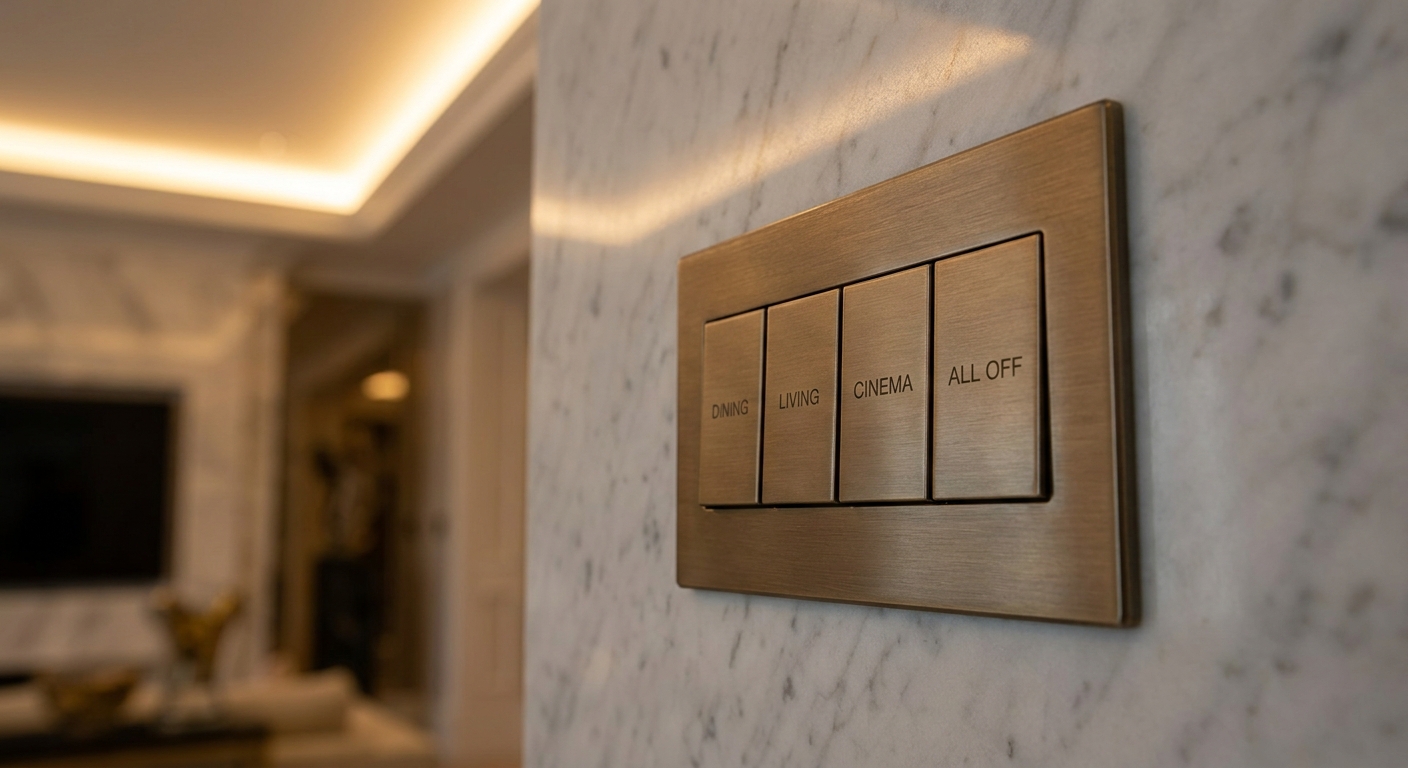
Recessed and cove lighting: The recessed lighting design must not introduce reflective glare on the perimeter glass. Indirect cove lighting at perimeter walls, dimmable to 5% on Lutron HomeWorks QSX or Crestron, addresses this.
Realistic budget ranges for Burj Khalifa interior projects
Full Armani Residence renovation (3-bedroom, approximately 3,800 sq ft): AED 2.2M to AED 4.8M depending on bespoke joinery and furniture content. Burj Khalifa Sky Collection penthouse (5-bedroom, approximately 7,200 sq ft): AED 5M to AED 14M. The cost differential reflects floor area, custom joinery scope, furniture brand selection, and audio-visual integration.
Audio-visual and smart-home in Burj Khalifa
The premium AV and smart-home integrators operating in Burj Khalifa residences include Sevenedge, BlueScreen Technical Solutions, and AudioVisor. Standard specifications include Crestron 4-Series control processors, Lutron HomeWorks QSX for lighting and motorized shading, KNX backbone integration with the building's MEP, and Sonos or full-distributed audio. Cinema-grade rooms (where the residence layout permits) use Trinnov Altitude processors, Steinway Lyngdorf or Wisdom Audio in-wall speakers.